
It’s tough on the streets right now. Debenhams is the latest retailer to fall victim to a combination of years of high overheads (leases) and lack of innovation to curb declining sales as consumers have increasingly moved online. It is a sign of the times that Boohoo has bought Debenhams’ website, customer data and selected contracts but not the 118 high street stores.
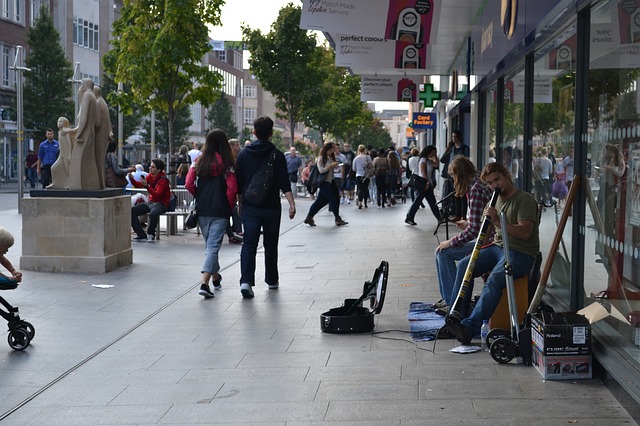
Like some other retailers, the giant was in trouble well before the Pandemic hit. It’s been a struggle for those with a high street presence over the past few years and now following the Covid crisis, very sadly there will be other retailers which will also never return to trading when town centres do open-up once again.
For all businesses, it will be a case of survival of the fittest. The innovators and those that can morph and adapt with a changed marketplace will be those that thrive. This means that 2021 could be the year that home-based estate agencies come of age.
Having worked from home, communicating with vendors and buyers largely remotely for almost 12 months, will we see a number of agents suddenly setting up from their spare space in their home? It will be interesting to see what works and what doesn’t. Travel agents have done it so why can’t we?
In the old days, buyers had to visit the local estate agency shop to find out what properties were available. Agents were the holders of valuable secure information; they knew what local houses had recently sold for. Now customers can simply find this out in seconds, online. The subsequent inevitable birth of the online agency soon started to disrupt the market. Online agencies tick the innovation box, but do they actually satisfy what the customer really wants and needs? Namely: good quality local knowledge, the best price achieved in the most appropriate timescale and with as little stress as possible.
New agencies and new models need to be innovative certainly, but they do need to supply exceptional customer service to remove emotional roadblocks to keep sales moving in order to make a healthy profit.
Along with the death of the high street, we are also starting to see the demise of the 9-5 working regime so the ability to balance family and work life is also important. Customers want to buy and sell when it suits them, and this means a more flexible approach. It also means it’s possible to drop the kids off and pick them up from school every day (when lockdowns allow of course).
Sure, an ‘open all hours’ culture won’t suit everyone, but it’s actually very efficient. Just think, it means no-one needs to be chained to a desk in a high street shop window between set hours every day whether there are customers or not. Work becomes task not time orientated and this gives a greater focus on responding to customers’ needs.

What is interesting is how home-based agencies can scale-up. A few years ago, I visited Australia and met briefly with John McGrath, founder of leading Aussie real estate group McGrath Estate Agents. A high percentage of the best agents in Australasia have at some point worked for McGrath so I wanted to find out more about that model. The tour of their substantial Sydney hub revealed there were no real estate agents at all sitting behind desks. They were all out in the community, in their territories, on the ground and doing very well thank you.
Similarly, I had the good fortune to meet Bill Soterof, worldwide president of Keller Williams at the NAR conference in San Francisco the following year. As founder of the leading US agency, I asked about the business model (frankly it would have been rude not to!). He confirmed how their hub and spoke approach drives many home-based agents. Their employees have access to their hub office for team work, training and resources, often in a non-high street location, and it works really well. Two years before the pandemic, he shared with me how he thought this would be the future of agencies in Britain too. Overheads are minimised and service and excellent marketing are prioritised. It offers a scalable approach as agents grow and take on more self-employed staff.
There is no doubt the high street estate agencies can offer a Rolls Royce service to clients but with such high overheads, can they continue and if so, at what cost? Purely online agencies will suit some customers but with house transactions still cited as one of the most stressful experiences there is, now home-based agencies can offer the best of both worlds – great service which really looks after clients with lower overheads – so everybody wins. Agents can earn an excellent living with the chance to scale up if that suits them in a world that is literally moving on.
Mark Meyer is the principal of home-based Meyers Estate Agents.



Comments (16)
Work in isolation is not and never will be 100% effective in a service industry. It also has an adverse effect on the mental well-being of a person. Effective communication and ease of access are essential tools. Working from home has limits and much of the hype it the new norm or way forward is only a reaction to a situation forced upon us in an unprecedented time. The people who push the nonsense are those that hope to gain while they can today, not tomorrow.
Pubs and restaurants will close short term but will we ever stop going out, which is one of life’s enjoyable adventures? While selling ones home isn’t the same type of adventure, it has its own specific needs which cannot all be done from home and one that tries will be left behind by the agent who provides a far better access and service on the high street.
The retails outfitters may be closing but is it the end of the high street? Many were in trouble, many were vulnerable for take over and ownership that that was getting long in the tooth? Certainly on-line marketing has helped but its short lived, sign of the times. Look at the continued High Street shoppers today (in lockdown!) and how it was before the pandemic. Retails shopping centres were full. Why, when many on-line outlets were already established many years ago?
People like to shop (husbands don’t?) for the adventure, ability to feel the quality and to test/try on. None are available on-line, returns are at record high?
What goes around comes around has stood the test of time. The public will want their High Street and will turn on the on-liners if they do not keep them happy and remember these business who’s sole purpose is not service, but to make money. Service is everything.
Never underestimate the value of a High St Office as a giant billboard at street level As well as a giant advert the office can do so many other things. Consider it as a business hub where lots of stuff goes on. Very difficult to price up the advertising strength of a High St office. However I do believe prospective purchasers and sellers would believe an EA without a High St presence is not a serious player. It tends to be the old fashioned that expect a High St office. No need to be concerned with the young as they can’t afford to buy. Plus desperate LL will be keen to offer good deals to keep the EA on the High St. It is irrelevant whether much business occurs at the office. It is simply a giant advert for the EA but a lot more useful than a billboard!!
paulgbar666
“Never underestimate the value of a High St Office as a giant billboard at street level”
This is very very true – we know that there will always be – and there always should be – agents who advertise their brands on the high street -Ii am sure that this is the case. When I worked at Foxtons Mayfair back in the 90’s we knew there was no doubt that Jon Hunt used his Mayfair branch as a giant billboard – BUT… where has that branch gone now- it is closed. They didn’t even have a digital presence then.
Now Foxtons have a state of the art ‘NASA’ style Chiswick office as a central hub which is not on the high street and their offices try not to look like typical estate agencies – but the next realm is simply the purely digital one – it’s cheaper, faster, 24/7 and there are lots of customers there too, all day and night.
Regarding Pauls comment – “However I do believe prospective purchasers and sellers would believe an EA without a High St presence is not a serious player. ”
We think it’s only a matter of time until this happens in your area. Where Meyers operates in Poundbury, we have seen 15 local high street agencies close down over the last 10 years, yet Meyers – off high street- purely digital – have been the market leader in the town for 7 of the last 10 years dominating the area as the local high performance agent – with most of the property awards like the BEAG award top 3% and local best branch awards. Using Australian agency systems, the speed of price achievement and consistency across the brand is well respected where we operated. The clients decide who to use but the high street can be still a great place to do business for some that’s for sure.
Of course you can sell a house from home you’ve been able to do that since essentially the birth of the Internet and online property marketing.
The question is how successful and scalable you are, and if you need to bring your team together are you just not better off doing it from a high street office where you have full market visibility.
Agree. Rightmove now take any savings you may gain from a cheaper alternative.
Also have to think about vendor perception over flogging a house. Vendors are our raw material.
re Bless You#9
“Agree. Rightmove now take any savings you may gain from a cheaper alternative.”
Thats why you must create a high fee alternative thats not on the high street. Thats what agents can now do. Our fee last year averaged 1.5% all year from a market of cheap fee high street agents. Its the service that people want, not the high street or the cheap fee
If your high street rent is similar to a managed office unit then it would be crazy not to have a big advert in a busier area.
We won’t always be in lockdown.
A solitary worker at home or a team together, we all know what’s best.
Good points here Herb – you will need a great team to dominate for sure – off or on the high street..
Complete nonsense.
The U.K. will bounce back to normal at some point and the best and most successful agents will have offices / shops and a team of people working together under one roof.
They won’t be sitting at home, burning candles in the style of Hygge while their children are home schooled in a carbon neutral way whilst playing with a their squishy Thunberg dolls.
Australia and the US are completely different markets with different cultures and fee models.
I wonder if the CEO of Blockbusters said the same?
I have a branch-based Estate Agency myself – yet to totally ignore that many industries have left the high street and believe Estate Agency is immune or in a special category of it’s own – is quite blinkered.
Where someone trades from is irrelevant- its the service we provide to the client that is important.
What does anyone else think?
Rubbish, and you know it. DVDs went virtual in the form of downloads and that’s like comparing apples with pears.
The older “retiring” agents and solo agents with lifestyle businesses, and not genuine businesses will rush to work from their back bedrooms because it suits their personal circumstances.
Larger dynamic agencies will take market share from premises, with teams in site, and decent levels of service. It’s blindingly obvious.
IMHO both James and AAA both make some points that have some relevance, however they may be based on different future timescales (and scale of business. I.e. SME Vs. Corporate)…
That is to say, in the short-term (the next 3-7 years) the High Street/traditional model will continue to operate as it has for many years, albeit with gradual/incremental contractions in the number of individual businesses, and in terms of headcount of those who remain operational. I don’t think for one moment that the current/traditional model of Agency is ”the future”…indeed, it is it’s past. As the fundamentals of social interaction changes, and the economic outlook remains bleak in the short term, it simply won’t be possible for many agencies (large or small) to continue to operate in the manner to which they have become accustomed. Upon the lifting of ‘lockdown’/Tier-ing measures, the economy is simply not going to ”bounce back” to where it was, and the filter-down effect of the economic impact of these measures, will be felt in every household, in every industry and in every corner of the country, for quite some time.
In the medium to long term, (and whilst I loathe the term ”Home-based” [it sounds very amateurish to me- but i’m not for one moment suggesting that all those operating in this way are, by virtue of working from home…amateurish]) I believe that the fundamentals of Agency will change, out of necessity and consumer behaviour/trends. I suspect that Agency in the future will have far less need/call for High Street premises (instead most firms will deem it wise to invest far larger sums in social media/online presence), and that Agency brands will become more individual/character driven (I.e. with the focus on the individuals that form a brand [in essence, the individuals becoming the ‘brand’], rather than on ‘the’ brand in the commercial/corporate sense). I stop short of likening the future of Agency to the American/Aussie model (or indeed a ”home-based” model), because I don’t believe it will develop in this format…But it will, in my view, become more about the person, rather than the commercial entity.
The other side of this particular coin, of course, will be the corporate behemoths who will entering the property sector and offering mass-market platforms for the, err….masses. Some will prefer niche individuals to provide their services, and some will want to simply use the ‘Amazon of property’.
I don’t believe there will be much in the way of middle-ground between the two…
However, I would certainly agree with the notion that to assume/hope/want Agency to continue in its current form, in the long term…may be an exercise in burying ones head-in-sand.
Working form back bedrooms. Not sure if that’s the case. If your a successful agent you will have a study, equipped study area or the new big thing – garden pod -amazing things ! Some of the directors I know of very successful businesses even work from palatial holiday homes overseas. Back bedroom-I think not. Get with it.
we started in our home office and moved to a really nice off high street office when the business required a bigger team and needed more hands on deck – but we never needed the high street – we know there are benefits of the high street but i think that the home office start up is clearly coming of age as more people are happy to be able to see their family and work digitally rather than physically.
Our home based agents have instructed well over a Billion of instructions and most vendors and buyers care not where you hail from – high street or not – as long as you are the best in class and able to show power and skill in what you do.
We have found that lower overheads and greater family time has had massive benefits for our businesses in terms of both profit and balance – there are plenty of ways to feel the team spirit as well as building your own team which can sit with you are inside the screen.
as Always an agent says
“Larger dynamic agencies will take market share from premises, with teams in site, and decent levels of service. It’s blindingly obvious. ” – but simply said those teams don’t need to be on the high street at all … do they…
I think you are right James – where have all the travel agents gone ?
I think you might have made a small omission there Mark, I’m sure you’re home based agents are quite good, but I doubt even they have listed over a billion instructions!