

The Property Energy Professionals Association (PEPA) was disappointed to read Russell Quirk’s recent opinion piece that Energy Performance Certificates (EPCs) have no value, a position that he justifies with misleading statements and views that do not reflect current public opinion.
Russell claims that energy assessor’s “check a few light bulbs” which trivialises what is actually a refined and detailed assessment of a dwelling to calculate its predicted energy demand for comfortable living. The biggest drivers are the age of the property, the construction type, the levels of insulation, what fuels are used, and how heat and hot water is produced and controlled in the home.
The article suggests that the assessor themselves produce a “huge carbon footprint” just by getting to the home. This is untrue. There are an estimated 10,000 energy assessor in the UK based in every corner of the country. This coverage means that assessors are normally local to the homes that they assess; that they are familiar with the local house types and construction methods; and that journey times are kept to a minimum. Anecdotally energy assessors tend to be very environmentally conscious individuals and frequently drive low emission vehicles as well.
It is then claimed that homeowners “couldn’t give a fig about these EPCs nor their ratings” which is simply untrue, and never more so than in the context of the fuel price crisis that we are now experiencing.
Since their introduction in 2008, well over 20 million EPCs have been issued and they cover, probably, about 50% of the 28 million homes in the UK . For a modest cost, EPCs have given home buyers and renters the ability to compare the energy performance of dis-similar homes on a like-for-like basis and receive a prediction of the cost of energy that is required to live comfortably and healthily.
The reality is that
+ EPCs have saved money. Implementation of EPC recommendations have saved UK households an average of £1000 each year. Source RAP
+ EPC ratings are now affecting property values
+ EPCs help reduce climate change. In a world increasingly concerned about environmental issues, particularly carbon emission that drive climate change, EPCs have raised awareness and understanding that 35% of carbon emissions come from the buildings in which we live and work.
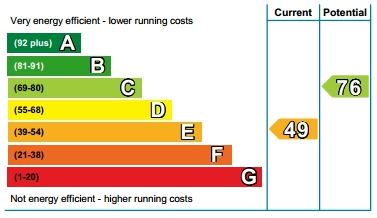 There are a number of ways of reducing carbon emissions. The best way to reduce energy consumption is by improving the building fabric. When energy demand has been reduced it is then necessary to ensure the method of producing the heat is efficient. EPC recommendations are tailored to the needs of the home and are an effective way of communicating options to the building owner. Since their introduction, the energy demand for homes in the UK has reduced by 20% (Odyssee-Mure).
+ EPCs help as we transition between fuel types. Recent world events are demonstrating that the supply chain for fossil fuels remains highly fragile, the power of OPEC has been replaced by Russia.
Whilst fossil fuels and hydrogen are all likely to have a role to play in our supply of energy for years to come there is little doubt that for fuel security, and carbon emissions, electricity will need to have a larger role. EPCs continue to be an effective tool at helping homeowners understand their energy usage, the opportunities to reduce energy demand and, in future, the ability to explore alternatives sources of energy.
Perhaps the biggest problem with EPC is that they are too cheap. What other industry can send a qualified professional to site to undertake a detailed, science-based assessment that provides valuable information about energy costs, environmental impact, and recommendations for improvement, for so little money. Perhaps if EPCs were more expensive the perception of their value would increase.
Martyn Reed is a director of PEPA and group managing director of Elmhurst Energy.




Comments (14)
Russel quirks comments were absolutely correct in every sense, the epc is absurd ,and will lead to a critical rental property shortage as landlords sell property that is not cost effective to bring up to the category C . For example i recently had and epc fall short of a c by 5 points , the reccomendations to meet this totalled £42000 !!! On a house that is worth approximatley £70k and generates a nett income of around £175 per month , total madness. The tennant has been there 10 years and is perfectly happy ! But will sadly be evicted because of this nonsense .Another problem is that many tennants either do not want to buy or are simply unable to do so, where will they be housed? The fact of the matter is that most housing over 15 years old is category D or below, but once again landlords ( not all of whom are millionaires ) are being targeted despite being a minority in the housing market and providing accomodation that the government cant ! The epc has many failings that need addressing with reality in mind ! I could argue that a kitchen extractor reduces property energy efficiency by removing heat that has created carbon in its production , or people that leave windows open when the heating is on should be fined ! Bit off common sense please !
Since 2007 I haven’t found a single person who understood what the EPC rating meant, even if it was a G and as for expecting an A, that is a joke in any event. People buy the property they like, be it a G rated idyllic chocolate box cover cottage, stately home or run of the mill D Band.
The consumer is not in the main interested in them. They are interested in their utility bills, so the link is there for an EPC to show possible savings but are they savings. Cost of solar panels and wind turbine will never be recovered in their lifetime as many have discovered and the push today for airflow heat pumps …. they were being rejected by the consumer over the last decade. Only the threat of no mains gas has made people think about them but they all ask the same question …. what about the electric bill?
The industries linked to EPC and recommendations cannot hide from the fact ….. they have created one massive carbon emission.
An EPC in its current form is somewhat pointless, government trying to drive people to air/ground source heat pumps which are categorised as electric heating. Electric heating actually scores very low when it comes to EPC rating, so what happens now ? Wait the EPC software provider will just change haw electric heating is scored so all of a sudden electric heating scores better and there we go a house that has a high scoring rating and everyone is happy but the house hasn’t really changed, go figure
The Property Energy Professionals Association (PEPA) was disappointed to read Russell Quirk’s recent opinion piece that Energy Performance Certificates (EPCs) have no value,……………. PEPA, don’t be disappointed or upset about Russell Quirk’s opinion, no one else pays any attention to his deluded opinions. He’s just a disrupter to our industry. He really needs a proper PR Company to control the utter ‘c@*p that comes out of his thuggish mouth.
The main factors in house choice will remain do you like it? Will it suit your needs? Where is it located? Can you afford it? Maybe given rising energy prices EPC could play a bigger role in the future.
The current EPC process is a racket and not fit for purpose. To become a “qualified professional” you need only to have completed a 5 day Domestic Energy Assessor attended course for £1400 or a 2 day online course for £850 with a bit of homework to be submitted, a PhD it isn’t. According to the Energy Trust “This qualification will allow you to produce Energy Performance Certificates (EPCs) for existing domestic dwellings anywhere in the UK”.
The “qualified professional” I got last time didn’t even pick up that the property had cavity wall insulation until it was pointed out and his ” detailed science–based assessment “ was accomplished in about 20 minutes with no scientific equipment (unless a collapsible ladder and clipboard counts as scientific equipment). However, to be fair it did only cost £50.
Potentially I guess I could do the course myself (I think it’s probably one of those that it’s hard to actually fail). I can then give all my rental properties a C rating prior to 2026, job done for an outlay of £850! I can then offer my services to any other cash strapped Landlord. Let’s say £200 for a C or £500 for a B!
An EPC is very much like Quirk, nobody is interested in them yet we have to put up with them although it could be argued that an EPC is useful for the property industry
Might I suggest that the original point of the EPC has been missed…?
Imagine a cabal of government ministers and their flunkies sitting around a table having the following conversation: (and yes, please do read this using the voices of “Yes, Minister”)
James Hacker: So, we’re agreed! We need do something about climate change.
Sir Humphrey: We need to make it look like we’re doing something about climate change.
Bernard: I know, we should find out how much energy each residential and commercial building in the country uses.
Sir Humphrey: Now, Bernard, that’s a lot of buildings to think about.
James Hacker: No, no. We don’t need to just think about them. We need to know the true facts.
Bernard: It is a lot of properties. It would take time and money to do it properly. It could cost a fortune!
Sir Humphrey: Indeed. Money that could be well spent elsewhere, or even not spent at all.
James Hacker: But we need to know! I’ve signed a document that says we will do it.
Sir Humphrey: Does the document say how long you have to do it?
James Hacker: No.
Sir Humphrey: Does the document say who has to pay?
James Hacker: No.
Sir Humphrey: Does the document say what needs to be included?
James Hacker: No.
Sir Humphrey: Well, the answer is obvious then?
Bernard: Is it?
Sir Humphrey: It is.
James Hacker: Is it?
Sir Humphrey: It is.
And, as they say, the rest is history.
Despite the above, I do actually think that the EPC is a good idea. I know they’re not perfect, but they were never intended to be.
We absolutely MUST do something about climate change. Our grandchildren’s health and wellbeing should be paramount.
We can no longer continue with the wholesale destruction of the planet.
And we can no longer think “Don’t worry, we’ll sort it out later.” Later is here right now and it is our responsibility to do something about it.
Knowing how much energy a building uses day to day allows people to decide what to do about it.
Without that fairly basic information, making decisions about what to do become simply a guessing game.
Have you stopped any traffic on the M25 of late?
No but only because I’m a chicken
Good sales pitch Mr Reed.
As above – standalone EPCs are a waste of time and why not integrate within surveys instead of squeezing more out of people. EPCs are only starting to influence price due to silly government guidance/regulation that will force the hand of landlords. I wonder what the motivation is….its not as though there is a nice wad of cash in it for our honest and public-serving government!
Yep, I think the whole point is to force the hands of landlords, you know, to do the right thing and invest in the properties that they own and rent out to tenants, who don’t have any say in the efficiency the of the property that they live in.
And its tenant who pays the energy bill, so they should have a say.
In fact the only thing they can do is vote with their feet. Oh hang on, that may be the point of all of this…. Give the consumer choice by giving them information in some sort of document that they haven’t had to pay for. What a novel concept.
Funding and grants should really only be for those who need them. Unfortunately we have grown accustom to grants being given to the rich who can recognise and act on the opportunity – see the Feed-in-Tariff (FIT) or the Renewable Heat Incentive (RHI) for such evidence of the rich getting richer off the back of such schemes. We should be helping those in fuel poverty first, not asset rich (and very probably cash rich) landlords.
I feel standalone EPCs are a waste of time. No chance they determine whether the majority of people buy a property or not.
But hey, they do bring in VAT to the Government.
Instead, surveyors could become the assessor and be included in surveys if a person wanted an assessment,
Senior Lightbulb Checker calls for useless EPCs to be more expensive. Brilliant