
Landlords selling a property they previously lived in could face an increased tax bill almost overnight from April amid a double whammy of changes.
Previous Chancellor Philip Hammond announced in his October 2018 Budget that from this April lettings relief – worth up to £40,000 of a capital gain for landlords selling a property they currently or previously lived in – would only be made available to those who are in shared occupancy with a tenant.
He also said the Government would cut the private residence relief (PRR) in these circumstances, which previously exempted any gains made in the final 18 months of ownership, to nine months.
The changes were included in the Draft Finance Bill 2019-20 but did not make it through Parliament before the election in December.
The new rules are now expected to be mentioned in current Chancellor Sajid Javid’s Budget in March and changed in the new tax year starting the following month.
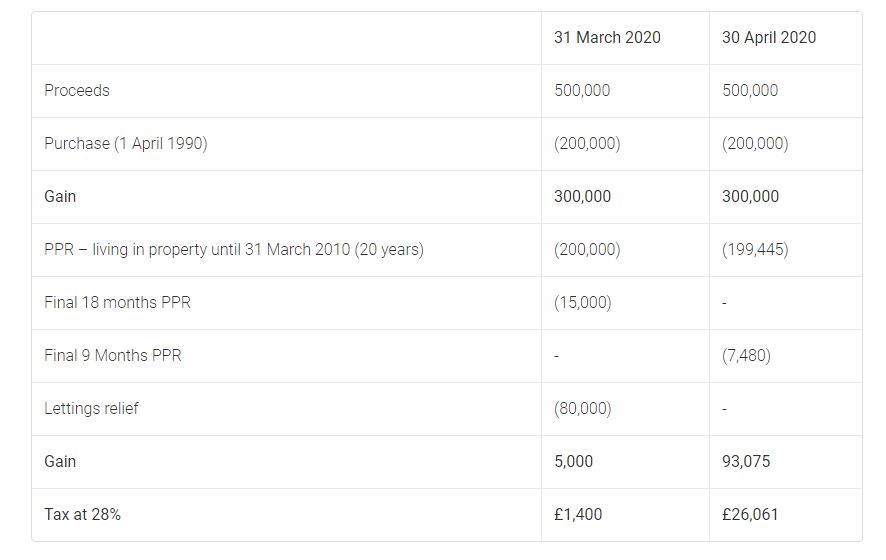
Accountancy firm RickardLuckin has an interesting illustration in the table below of how much tax bills could increase by between March and April based on married couples combining the £40,000 relief to get £80,000 and using the PRR.
It highlights the difference if a married couple purchased a house on April 1 1990 for £200,000 and lived there for 20 years before then letting the property and selling for £500,000.
A married couple renting out a property could be almost £25,000 worse off when they come to sell.
The Association of Taxation Technicians (ATT) is calling for transitional measures to avoid this cliff edge.
Michael Steed, co-chair of the ATT’s technical steering group, said: “We recommend that if the shared occupation change to lettings relief goes ahead, any entitlement built up under the old rules should be frozen and preserved at April 5 2020, with the new conditions only applying to let periods after that date.
“This should help to avoid the cliff edge effect and avoid the retroactive effect of the policy.”




Comments (4)
I have been forced to make my tenant in my former home homeless due to this. Otherwise I would have waited until the tenant wished to leave before I sold.
The other issue I am facing is that selling one property with a capital grain of £60k in Cambridge will result in a lot more tax then if I was selling three properties with a capital grain of £20k each up north, as I could sell the 3 properties over 3 tax years and hence not have to pay higher rate tax on the grain.
This stemmed from some stupid proposals in a report by the group Onward. They suggested it in combination with another idea about landlords selling to tenants in situ and them both ‘sharing’ a CGT discount. This was the carrot. They then suggested the changes mentioned above, as the ‘stick.’ Of course all Hammond picked up was the stick… And this is continuity Government as far as landlords and letting agents are concerned.
Hmmm. See, that ‘sharing’ of the CGT relief to rental property sold to a sitting tenant, if that could somehow be worked as a deposit for the mortgage, that would help those looking to buy and the Landlord looking to sell!
So a property owner who can’t find a buyer for his family home and needs to move, decides to help out the country with its shortage of housing and rents the property. Civil servants then rob the do gooder of a landlord that helped them out, when they manage to sell. I think the country was hoping that Boris & Co would step back from robbing the hand that helps … time will tell.