
Prime minister Boris Johnson acted like a “dishonest estate agent” and lied to the Queen.
The accusation was delivered yesterday in written submissions to the Supreme Court by former prime minister Sir John Major claiming that Johnson had not told the truth.
Major likened Johnson’s behaviour to that of an agent in breach of his fiduciary care when he had not told a vendor that the buyer planned to ‘flip’ the property for a quick profit.
He said that the duties of the prime minister to the Queen could hardly be less than those of an agent to their client.
Major is supporting Remainer activist Gina Miller in her attempt to get the proroguing of Parliament ruled unlawful.
In written evidence, Major cited a court case where an estate agent was found to be in breach of his fiduciary care after he lied that the buyer of a new home would live there.
In fact the agent knew all along that the buyer not would not live there and that the property would be sold again for a profit as soon as the sale completed.
Major argued: “It could hardly be suggested that the duties of the prime minister to the monarch are less than those of an estate agent to a home owner.
“Accordingly, if the court is satisfied that the prime minister’s decision was materially influenced by something other than the stated justification, that decision must be unlawful.”
The Times and Mail are among papers with similar headlines – this morning the Mail ran its coverage under the headline: “PM is acting like a dodgy estate agent says Major”
Estate agents’ fiduciary care translates as a duty of care to the principal – generally speaking, the property owner.
There are two main rules under fiduciary duty – no conflict, and no profit.
The agent must not place itself in a position where its own interests conflict with that of the principal, or where there is a possibility that this may happen.
It must not profit at the expense of the principal.
Importantly, an agent might avoid breaching these duties if it has obtained the informed consent of the principal.
If there is a breach of fiduciary duty, it allows the wronged principal to bring a claim.
The home owner could, for example, ask the courts to rescind the contract, which could involve returning the property to the seller and refunding the purchaser’s money.
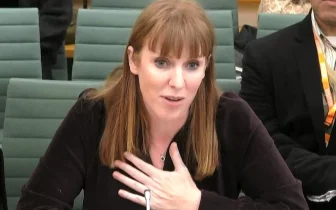
Below, how The Times previewed Sir John Major’s comments:




Comments (21)
Major, Blair and Cameron would do well to reflect on their own abysmal periods in office and realsie that their time for intervention has, – Passed ( or to use the vernacular, Shut the F… up )
John Who?
Oh John the liar who also prorogued parliament, allegedly to cover up cash for questions, hypocrite.
I know that we are an honest agent, we pride ourselves on it, even if we do lose the vendor to another agent who was happy to hide the fact that the property is having ongoing treatment for knot-weed.
Shame for the unsuspecting buyers who are likely very excited to be buying their first home after years of hard work and saving.
Some do give all of us a bad name and they know who they are individually, even if they ride gunshot over their employer just to win the instruction. It is the agents reputation that is damaged.
Edwina said…. “John Major was a sexy beast” following the revelation of their 4 (FOUR?!!!) Year secret affair
John? Are you there John? John? ……are you coming???
Call us what you want John …..just remember that Estate Agents are way more credible than you.
John thought he was just popping out for a Currie?
……fill in your own John Major Quote here……
”Please Sir, can I have some more”
You made Edwina’s Day & Night it seems John ……and you’ve certainly made me laugh at the thought of your laughable career.
Stick to cricket John, stumps & balls, you remember those ……with your “Big Blue Underpants” as revealed by Edwina.
…….tell it like it is.
”Acted like a DISHONEST POLITICIAN”!!!
I would happily Vote for a Potato over a Politician. At least you can trust the Potato to do its job.
I’ll leave you with this Happy Friday Thought…..
John & Edwina with Barry White playing his thang in the background
……or
2 Potatoes & Barry White?
Thought so! The Potatoes would be far more interesting!
John Major’s Epitaph….. “This Major was Always a Minor!”
I suspect there will always be a degree of shooting the messenger. We all get to manage the fall out when buyers and sellers move the goal posts and never is there a personal gain, just headache. It’s disappointing though given how hard and honestly the majority work.
This is the same John Major who presided over the most immoral government we have ever had the misfortune to experience. Week after week of either financial or sex scandals involving his own MPs, his government became the shameful laughing stock of the world.
To cap it all, John Major led his party to a disastrous General Election in 1997 where he suffered a humiliating, but well deserved, landslide defeat and the record largest swing from Conservatives to Labour since 1945.
We don’t need to be lectured to by this pompous, self centred man who is strangely blind to his own many failings.
He’s a hypocrite.
He likes a nice hot Currie though!!!
Bring back Spitting Image is all I can add. ‘How are the peas, John?
John Major has made an unfortunate analogy, without doubt. But hardly surprising for an industry where corporate players (in particular) have failed to grasp the concept of acting in the clients best interest at all times.
Cross selling other products and targeting their staff to do so has done more to drive good people to leave the industry than anything else and undermines other efforts to improve our reputation.
But dishonesty can exist in any profession and estate agency remains a soft target. We now have a modest degree of transparency regarding referral fees, but who’s actively policing this?
A reference to the obligations under the Consumer Protection Regulations might have had more resonance following absurd promises before and since the referendum ! Obviously not applicable to politicians who are allowed to make false claims and promises.
Whereas you could argue that Major is being a hypocrite …. from fullfact
“Major’s prorogation in 1997 had the effect of delaying a report into Conservative MPs taking bribes until after the 1997 election, whether or not that was his intention.”
To liken Boris Johnson to a dishonest estate agent is an insult to dishonest estate agents.
I hope our illustrious (or is that useless) NAEA makes strong representation to Major that his comments are insulting and wholly inappropriate. And how honest was he re Edwina!!!
A more fitting analogy would surely have been:
Prime minister Boris Johnson acted like a “politician conducting an illicit affair” and lied to the Queen.
Says the man who has a personality like a wet mop.
Wrong. A wet mop has a personality.
That perception should be on its way out with referral fee transparency now existing and education and regulation on the horizon.
That is if agents actually deliver the transparency they are being asked to do! Little evidence of it currently
This is further proof, if it were needed, of the deeply unfair perception the public has of agents.
If it happened as quoted then the agent is at fault. If all agents acted purely in their clients best interests at all times then maybe the public’s perception would change for the better. Unfortunately, as in all walks of life, there are those that will always put their own greed first, and therein lies the problem.
erm…. Not sure I agree with this… (Yes we should always act in our clients best interest) That I agree with
BUT quite simply we are messengers more often than not and once you deliver the news someone does not want to hear…. we are horrible etc etc… easy targets to blame.
If I got paid a pound for every time a Buyer or Seller has lied to me and the lie has been passed on, because not all lies can be detected, then I would have a healthy little income stream. I think we are too often in a No Win situation at a stressful time in a world of lets blame someone…
Imagine the new owner of a home bumping into the old owner in the local shop…
Old Owner) Hi, hope you are happy in the home
New Owner) Yes, we love it, thank you so much.
Old Owner) Hey it’s ok.. but I am sorry you paid the extra £10k, I would have accepted the lower offer, but the agent said, they knew they could get more, we felt awful but it did pay for our new caravan, so thank you.
New Owner) Oh… really, wtf… can I have the £10k back, or your caravan.. no actually scrap that… the agent should have told me this when acting in your best interest…
Find me on “www.suetheagentforactinginthevendorsbestinterest.con”
Are you joking? I’ve never met an estate agent who didn’t brag about his or her ‘bag of tricks’?